
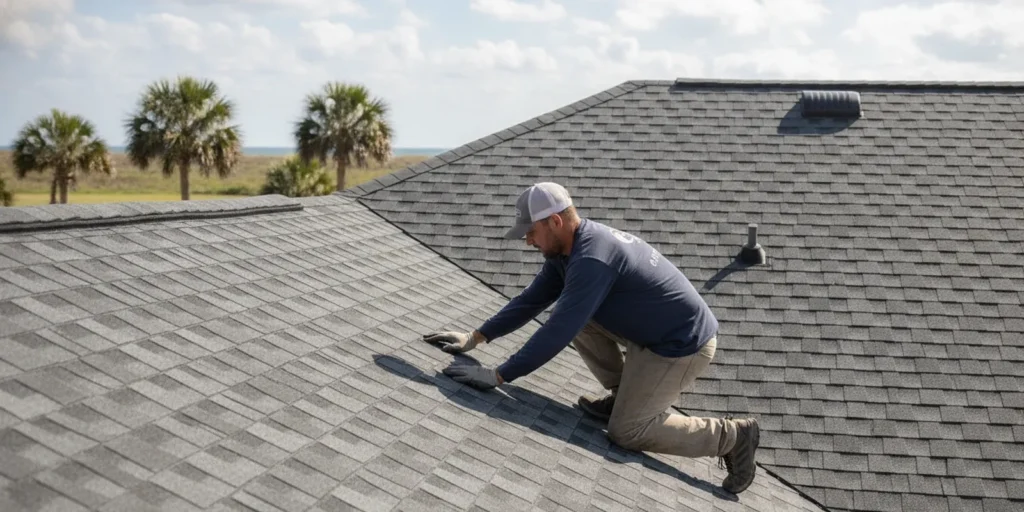
Roof repair cost depends on what is damaged, how far the problem extends, which materials are needed, and how safely the area can be reached. A small, accessible repair may involve a different scope than a leak tied to flashing, a roof penetration, or damage beneath the surface. If you are weighing next steps for a home in the Grand Strand or southeastern coastal North Carolina, start by identifying the cause rather than guessing from a stain indoors.
Schedule an inspection by phone
What affects roof repair cost?
There is no single repair price that applies to every roof. A roofing professional needs to understand the defect and the work required before giving a meaningful estimate. The main factors usually include:
- Source of the problem: A leak may involve a damaged shingle, flashing, a pipe boot, or another roof detail. Water can travel before it appears inside, so the visible ceiling mark may not sit directly below the entry point.
- Extent of damage: One isolated area can call for a different repair than a defect affecting nearby materials or more than one roof section. The condition of surrounding components matters.
- Roofing materials: Repair methods and material needs vary by roof system. Coastline Roofing works on residential asphalt shingle and metal roofs, as well as commercial roofing including TPO.
- Access and roof layout: Pitch, height, obstacles, and the location of the affected area can influence how a repair is approached and what safe access requires.
- Underlying conditions: If a repair reveals damage beyond the visible surface, the scope may need to be discussed before additional work is authorized.
These factors are why online averages or a neighbor’s invoice may not describe your roof. A useful estimate should reflect the actual defect, materials, access, and agreed scope—not an assumption based only on the roof’s age.
Why can the leak location be misleading?
Water can move along roof decking or framing before it reaches an interior ceiling. A stain, drip, or damp area is a clue, but it does not prove the exact roof entry point. Looking only at the spot inside can lead to a repair that misses the source.
An inspection can examine accessible roofing materials, flashing, penetrations, edges, drainage, and nearby problem areas. Photos and findings help make the recommendation understandable. Depending on what is found, the next step might be a localized repair, monitoring, further evaluation, or a broader conversation about the roof’s condition.
For more detail on how the assessment works, see Coastline Roofing’s roof inspection information. If a localized defect is confirmed, the roof repair page describes the repair service.
When is a repair a reasonable option?
A repair may make sense when the problem is localized and the surrounding roof remains serviceable. For example, a damaged shingle or a failed flashing detail may be repairable without replacing the whole roof. The recommendation depends on the roof’s condition and the extent of damage, not on age alone.
Replacement may be worth discussing if inspection finds broader deterioration or recurring problems that a small repair would not address. That does not mean every leak calls for replacement. Ask the roofer to explain what was observed, what the proposed work covers, and what remains uncertain. Coastline’s roof replacement overview explains the process for residential systems.
What should you ask before approving a repair?
Before work begins, make sure you understand the scope. A clear conversation can help you compare proposals and avoid confusion about what is included.
- Where is the suspected source, and what evidence supports that finding?
- Which materials and roof components will the repair address?
- Does the proposed work include nearby damage, or is that excluded?
- What conditions could change the scope once work is underway?
- How will the completed work area be checked and the property cleaned up?
- What workmanship warranty applies to this particular roof system and repair?
Workmanship warranty terms vary by installed roof system, and applicable manufacturer material warranties are separate. Ask for the terms relevant to the proposed work rather than assuming one duration applies to every repair.
What if the roof was damaged in a storm?
After wind, hail, or debris, an assessment can document visible roof damage and the recommended roofing work. Photographs and a clear description can help you understand the condition and discuss the next step. Any insurance carrier—not the roofing contractor—decides whether a policy covers a claim. Do not treat an inspection or repair recommendation as a promise of claim approval.
For general consumer guidance about roof coverage, the Iowa Insurance Division explains roof coverage options, including the distinction between actual cash value and replacement cost. Policy terms differ, so review your own policy and speak with your insurer about coverage questions.
How can you prepare for an inspection?
Note when the leak appears, whether it changes during rain or wind, and which rooms or areas are affected. If you can do so safely from the ground, take a photo of visible exterior concerns. Avoid climbing onto a roof or disturbing damaged materials. Share any previous repair details and tell the inspector if water is actively entering so the immediate concern is clear.
Coastline Roofing serves Myrtle Beach, North Myrtle Beach, Little River, Longs, and Conway, along with other Grand Strand communities and southeastern coastal North Carolina. An inspection is a chance to review what is visible, discuss whether repair is suitable, and understand what further evaluation may be needed.
When you understand the cause, repair scope, materials, and access needs, you can make a better-informed decision about the work your roof actually requires.