
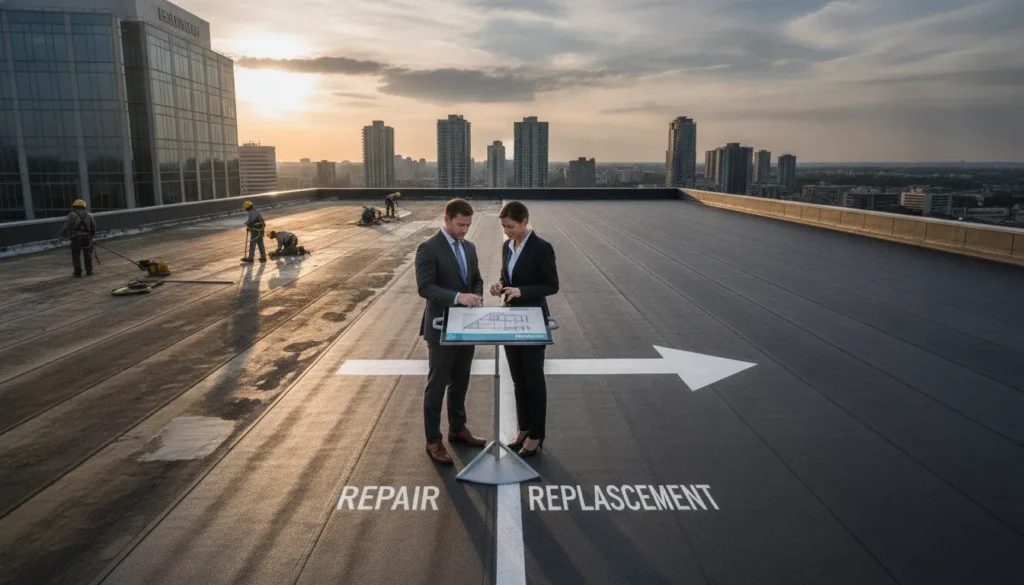
A commercial roof protects more than the building itself. Leaks can disrupt business, damage inventory or equipment, and create extra work for property managers and tenants. When signs of trouble appear, the key question is whether targeted work can resolve the problem or whether the roof needs broader attention. The choice between commercial roof repair or replacement should reflect the condition of the entire system, not just one ceiling stain or visible opening. For coastal buildings, strong winds and driving rain can put added pressure on roof edges and connections. This guide covers the warning signs to watch for, the value of a professional inspection, and the questions to ask before approving roofing work.
After documenting the issue from a safe location, the next step is an assessment that separates an isolated repair from a broader replacement need. Coastline Roofing can review the roof’s condition, system, and use, then explain whether roof repair or roof replacement is the better fit. Schedule an inspection to discuss the documented findings and practical options.
Key Takeaways
- Arrange an inspection when you notice roof trouble: Record leaks, ponding, visible damage, or storm-related changes from a safe location, and share your notes with a roofing professional.
- Compare repair and replacement based on documented findings: Ask for photos, a clear assessment of the roof and underlying materials, and written options with comparable scopes and costs.
- Choose a contractor who fits your building’s needs: Verify licensing, insurance, commercial and coastal experience, project oversight, and warranty terms; keep records of inspections and repairs.
What Signs Indicate a Commercial Roof Needs Repair or Replacement?
Commercial roof problems can begin with a small opening, a failing roof detail, or a drainage issue. If water gets past the surface, it may affect insulation, decking, ceilings, and equipment inside the building. Check for changes both indoors and from a safe vantage point outside. Note when you first see a problem and whether it follows heavy rain, strong winds, or other severe weather. Photos taken from the ground can help document visible changes.
One sign does not automatically mean the entire roof needs replacement. The right next step depends on the roofing system, the extent of damage, and the condition of the materials beneath the surface. If you spot a leak or suspect storm damage, arrange a professional inspection rather than climbing onto the roof. A qualified contractor can assess the full system, identify the likely source of the problem, and explain whether a targeted repair or broader work is appropriate. Coastline Roofing offers commercial roof inspections and repair services for businesses in Myrtle Beach and nearby coastal communities.
Urgent signs: sagging, active leaks, exposed decking, or storm damage
A sagging area, exposed decking, or water actively entering the building calls for prompt attention. These signs may point to damage beyond the roof surface, such as wet insulation or compromised decking. Keep people away from affected areas, move equipment or inventory only if it is safe, and contact a commercial roofing contractor. If water is near electrical equipment, follow your building’s safety procedures and get help from the appropriate professionals.
After a storm, avoid climbing onto the roof to check for damage. Wind and rain can leave surfaces slippery or unstable, and damage may not be obvious from above. A contractor can inspect the roof safely and document what they find. Prompt assessment can help clarify what needs attention and reduce the chance of an existing problem spreading.
Interior clues: water stains, damp insulation, ceiling damage, or musty odors
Interior signs can reveal a roof leak even when the source is not visible from the ground. Check ceilings and upper walls for new stains, bubbling paint, damp spots, or damaged ceiling tiles. A musty odor that lingers may also point to trapped moisture, particularly after a leak or period of heavy rain. Keep a record of where each sign appears and when you notice it.
Water can travel along roof components before showing up indoors, so a stain may not be directly below the opening. Damp insulation may also be hidden from view. Avoid removing ceiling materials to investigate unless you are qualified to do so. A roofing professional can trace the likely path of moisture and determine whether the roof, insulation, or other parts of the building need attention.
Surface damage: open seams, cracks, blisters, punctures, or displaced roofing
From a safe location, look for visible openings or changes in the roofing surface, including open seams, cracks, blisters, punctures, or displaced material. Damage may let water reach the layers below, and exposure to rain and wind can make some issues worse over time. Pay particular attention to transitions, roof edges, and areas around rooftop equipment, where materials meet or the roof may be disturbed.
Do not walk across the roof to inspect these areas unless you are trained and authorized. A professional can check the surface and determine whether the damage is isolated or part of a wider pattern. Common commercial roof trouble spots include seams, flashing, penetrations, and drainage components. Identifying the source helps ensure that a repair addresses more than just the visible opening.
Failing flashing, edges, fasteners, penetrations, or metal panels
Flashing seals areas where the roof meets walls, vents, HVAC equipment, and other penetrations. If flashing has pulled away, cracked, or corroded, water may get beneath the roofing system. Also watch for loose or missing fasteners, lifted edges, and metal panels that look shifted or damaged. These details can be vulnerable to wind, especially around the roof perimeter.
Make a note of what you can see from the ground and when you first noticed it, especially if the change followed a storm. A roofing contractor can inspect the connections and recommend repairs that suit the existing system. The right solution depends on the material and the condition of the surrounding area; a quick surface patch may not address a loose edge or failing connection. Avoid touching or attempting to secure roof components yourself.
Ponding water, blocked drains, or recurring moisture
Water that remains on a low-slope roof after rain may point to blocked drains, inadequate drainage, or areas where the roof has settled. From the ground, check for visible debris around downspouts and other accessible drainage points. Do not climb onto the roof to clear drains unless you are trained and equipped to do so.
Recurring ponding can place added stress on a roofing system and may contribute to leaks or material deterioration. If water continues to collect after accessible drains are cleared, or if moisture appears inside the building, request an inspection. A contractor can assess the drains, roof slope, and surrounding materials to find the cause. Keep track of where ponding occurs and how long it lasts. That information can help the contractor evaluate the issue and recommend a repair or maintenance plan.
Coastal wear from wind-driven rain, salt air, or severe weather
Commercial roofs in Myrtle Beach and along the Grand Strand face coastal conditions, including wind-driven rain, strong winds, salt air, and severe storms. These exposures can put pressure on roof edges and flashing, loosen components, and contribute to corrosion on some metal parts. The effect depends on the roofing material, its installation, and its ongoing maintenance, so visible wear should be assessed in context.
After severe weather, look from a safe location for displaced materials, debris, new leaks, or changes around rooftop equipment. Damage may not be obvious from the ground, even when the roof has been affected. A contractor familiar with coastal buildings can inspect vulnerable areas and explain what needs attention. Coastline Roofing serves local businesses with roofing services for coastal properties, including inspections, repairs, and storm-damage work.
How Do You Choose Between Commercial Roof Repair and Replacement?
The decision should reflect the condition of the whole roof, not just the most visible leak. A professional inspection can help identify whether damage is confined to one area or affecting the roofing system more broadly. For commercial properties in Myrtle Beach and the Grand Strand, the assessment should also account for coastal exposure, including wind-driven rain, salt air, and severe weather.
Ask for written findings and photos, along with repair and replacement options when appropriate. This gives you a clearer basis for weighing the roof’s condition, the likely scope of work, and the needs of your building.
What a professional inspection should cover: roofing, insulation, and decking
A thorough inspection checks the roof surface as well as the components that help keep water out. The contractor should assess the membrane or panels, seams, flashing, penetrations, drains, and roof edges. They should also look beneath the roofing where possible for wet or compressed insulation and damaged decking, since hidden moisture can affect the roof’s performance and the building below.
Ask for photos and notes showing what was inspected, what damage was found, and what work is recommended. A commercial roof inspection can help distinguish a localized problem from damage affecting a larger area. Coastline Roofing provides commercial roofing services for property owners and managers across the Grand Strand.
How roof age, repair history, leaks, and condition shape the decision
Roof age offers useful context, but it should not determine the project by itself. Roofs of the same age can have different needs depending on installation quality, maintenance, weather exposure, and previous repairs. A contractor should review the roof’s repair history, the frequency and location of leaks, and the condition of the system as a whole.
Leaks near a drain, curb, seam, or penetration may point to a localized defect. Leaks in several areas, repeated repairs, or widespread deterioration may suggest a broader problem. Ask the contractor to explain how they traced interior moisture to a likely entry point. Water can travel beneath roofing materials, so the visible ceiling stain may not sit directly below the source.
When targeted repairs can address isolated damage
Repair may be a practical choice when damage is limited and the surrounding roof remains in sound condition. The work might involve patching a puncture, resealing a seam, replacing damaged flashing, or repairing a small area affected by a storm. The contractor should use materials suited to the existing system and check nearby details that could also let water in.
Addressing a problem early can help protect the roof and extend its service life. The CD Strong guide to roofing myths notes that timely repairs can add years when damage is caught early. Before approving the work, ask what the repair is expected to resolve, how the contractor will check the finished repair, and whether any other areas should be monitored.
When widespread deterioration or recurring failures call for replacement
Replacement may be worth considering when deterioration affects large portions of the roof, leaks keep returning, or repairs no longer provide reliable performance. Saturated insulation, damaged decking, widespread seam failures, or repeated storm damage may also affect the decision. The contractor should explain which inspection findings support replacement and whether any sections can remain in service.
A recommendation to replace the roof should follow a documented assessment, not a quick visual check or one leak. As Constitution Contracting explains, skipping a thorough evaluation can lead to unnecessary spending. Request a written comparison of repair and replacement options, including the scope of work, proposed materials, expected disruption, and any uncertainty about concealed damage.
Why one leak doesn’t always require a full roof replacement
A leak can result from a failed flashing detail, an open seam, a damaged penetration, or another isolated defect. It does not automatically mean the entire roof needs replacement. The contractor should trace the moisture path, inspect nearby areas, and check the insulation and decking before recommending a solution.
Many leaks can be resolved with targeted work, as the Platinum Roofing guide to commercial roofing myths explains. Still, water can travel beneath the roofing, so an interior stain may not be directly below the entry point. Ask the contractor to show you the suspected source and explain why the proposed repair is appropriate for the roof’s overall condition.
When to request a post-storm assessment and document damage
Request an assessment after severe weather if you notice active leaks, displaced roofing, damaged flashing, debris impact, or water entering the building. Damage may not be easy to see from the ground, so have a qualified contractor inspect the roof safely. Avoid climbing onto it yourself, particularly if the surface is wet or damaged.
Take dated photos of interior stains, affected materials, and visible concerns, and record when leaks occurred and which areas were affected. A post-storm assessment can help identify smaller issues before they worsen. Share your records with the contractor and, if relevant, your insurer. Ask for written inspection findings and recommended next steps so you have a clear record of the roof’s condition.
Which Commercial Roof Repairs Address Common Problems?
Commercial roof repairs should address the cause of a problem, not just the damage you can see inside. A ceiling stain may appear far from the opening where water enters, since moisture can travel along insulation or roof components before it becomes visible. A thorough inspection checks the roofing surface, seams, flashing, penetrations, drains, insulation, and decking to determine what failed and how far the damage extends.
On low-slope roofs, problems often develop around details such as drains, roof edges, rooftop equipment, and transitions between materials. These areas face extra weather exposure and movement, so a repair plan should account for their condition as well as the visible leak. Common commercial roof trouble spots include seams, perimeters, transitions, drains, and areas around rooftop equipment.
The right repair also depends on the roofing system, the building’s use, and the surrounding coastal conditions. Wind-driven rain and severe weather can test roof details across the Grand Strand, while a busy commercial property may need repairs scheduled to limit disruption. A qualified contractor should explain what failed, which materials suit the existing roof, and whether a targeted repair makes sense. Coastline Roofing serves commercial properties in Myrtle Beach and nearby communities with roofing services suited to coastal conditions.
Repair leaks, seams, flashing, penetrations, and damaged areas
Leaks often start where roofing materials meet or where something passes through the roof. A contractor may inspect seams, flashing, vents, pipes, rooftop equipment, expansion joints, and roof edges to trace the entry point. The spot where water appears indoors does not always reveal where it entered, so finding its path is an important part of the repair.
Depending on the roofing system and nearby materials, the fix may involve resealing a penetration, replacing damaged flashing, patching a puncture, or repairing a failing seam. Simply covering a wet area can leave moisture trapped below the surface or allow the leak to return. The areas where commercial roof problems commonly occur include seams, transitions, drains, and rooftop equipment. Ask the contractor to identify the failure and explain how the repair will address it.
Fix drainage problems and ponding water
Water that remains on a roof after rainfall can add stress to roofing materials, seams, and the structure below. Ponding may result from blocked drains, damaged drainage components, a low area in the roof, or changes that affect how water flows. Clearing a drain may help, but recurring ponding calls for a closer look at the roof’s slope and drainage design.
A repair plan may include clearing drains and scuppers, fixing damaged components, or addressing areas where water collects. The contractor should also check for moisture beneath the roofing surface. Flat roofs are more prone to standing water, which can contribute to material deterioration, as described in this overview of commercial roofing types. After repairs, regular checks of drains and roof surfaces can help property teams catch blockages before water builds up again.
Match repair materials to the existing roofing system
A repair needs to work with the roof already in place. TPO, EPDM, PVC, modified bitumen, and metal each require compatible materials and installation methods. An unsuitable patch or sealant may not adhere properly, which can lead to premature failure or further damage. Ask the contractor to identify the roof system and explain how the proposed materials will connect with it.
Experience with the specific material matters, too. A contractor familiar with one membrane type may have limited experience repairing another. When reviewing estimates, ask whether the crew has completed similar work on the same roofing system, and request the repair materials and installation steps in writing. These questions about a contractor’s roofing experience can help you assess whether the proposed repair suits your building.
Use coatings or roof recovery only when the roof and substrate qualify
A roof coating or recovery system may suit a roof that is generally sound, but it is not the right solution for every problem. Before recommending one, a contractor should check for trapped moisture, damaged insulation, weak decking, widespread membrane failure, and drainage issues. Applying a coating over wet or unstable materials can hide damage instead of resolving it.
Ask what the inspection found and why your roof qualifies for the proposed system. The contractor should explain how damaged areas will be repaired first, how the surface will be prepared, and what maintenance the roof will need. Regular inspections can help identify developing issues early, as discussed in this guidance on roof maintenance and repair planning. Compare coating or recovery with repair and replacement options based on the roof’s condition, not just the initial price.
Know when repeated patching no longer makes sense
A targeted repair can extend a roof’s useful life when damage is limited and the surrounding materials remain in good condition. But leaks in several areas, widespread deterioration, saturated insulation, or recurring seam failures may point to a broader system problem. In that situation, another patch may only postpone a larger decision.
Ask the contractor to document the repair history, current damage, and condition of the roofing, insulation, and decking. Then compare the likely cost and expected performance of continued repairs with replacement options. An aging roof does not automatically need replacement, but repeated failures deserve a careful review. Early repairs can sometimes extend a roof’s service life, as explained in this article about when repairs may still be worthwhile. Request clear reasons for any recommendation to patch or replace, along with the expected limits of each option.
Plan safe access and repairs around business operations
Commercial roof repairs need a plan for worker access, materials, equipment, and areas that must stay open to tenants or customers. Before work begins, confirm where crews will enter, how they will protect walkways and landscaping, and whether noise, odors, or temporary closures could affect daily operations. For occupied buildings, scheduling work during quieter hours may reduce disruption.
Ask how the contractor will protect rooftop equipment, keep the work area orderly, and share progress updates. Property managers can use this information to coordinate access and notify tenants. Clear communication also helps everyone know whom to contact if plans change. A contractor who provides project oversight and communicates expectations from the start can make the process more manageable. This guide to choosing a roofing contractor offers helpful questions to ask about communication and attention to detail.
Which Commercial Roofing Materials Suit Your Building?
The right roofing material depends on how your building is designed and used, not just on the product’s price. Start with the roof’s slope and structural capacity, then consider drainage, rooftop equipment, foot traffic, and the maintenance the system will need. A material that suits a warehouse may not be the best fit for a restaurant, office, or building with several roof sections.
Coastal exposure also matters. Commercial roofs in Myrtle Beach and nearby communities may face strong winds, wind-driven rain, humidity, and salt air. These conditions can affect seams, flashing, fasteners, and exposed metal components. Ask a contractor to assess the whole roof assembly, including the surface, insulation, decking, edges, and drainage, before recommending a material.
TPO, EPDM, and PVC are common choices for low-slope roofs. Metal and asphalt shingles may suit some sloped buildings, while layered and specialty systems can work for specific structures. Each option has different installation and maintenance needs. A contractor familiar with commercial roofing in coastal communities can explain which systems fit your building and what trade-offs to weigh.
TPO: reflective and heat-welded; consider installation quality and puncture resistance
TPO is a single-ply membrane often used on low-slope commercial roofs. Its reflective surface can reduce the amount of solar heat absorbed by the roof, which may help lower cooling demand. The seams are heat-welded, so installation quality matters. Ask how the contractor will check welds and detail seams, edges, and penetrations. You can review GAF’s TPO roofing information when comparing system specifications.
TPO can be punctured by tools, foot traffic, or equipment work. Consider where technicians will walk and whether the roof needs designated walkways or added protection around service areas. Have the contractor assess the existing insulation and deck, too. A membrane cannot resolve problems in the layers beneath it, so the full assembly should be considered before installation.
EPDM: flexible and often repairable; watch for punctures and seam issues
EPDM is a synthetic rubber membrane used on many low-slope commercial roofs. Its flexibility can suit a range of conditions, and localized damage may be repairable when the surrounding roof remains sound. The right repair method depends on the membrane’s condition, the type of seam, and the extent of the damage. Ask the contractor to inspect those details before recommending a patch.
Punctures, open seams, and deteriorated areas around roof penetrations can let water reach insulation or decking. Regular inspections can help identify these issues early. Also consider how often staff or service contractors access the roof, since foot traffic and equipment work may affect the membrane. If leaks appear in several areas or keep returning, request an assessment of the entire roof rather than treating each leak as a separate problem.
PVC: heat-welded and resistant to some chemicals; weigh higher material costs
PVC is a single-ply roofing membrane with heat-welded seams. It may suit buildings where the roof could be exposed to grease, oils, or certain chemicals, including some restaurants and industrial properties. Resistance varies by product and by the type and level of exposure, so ask the contractor to confirm that the proposed membrane is appropriate for your building’s conditions.
PVC may have a higher material cost than some alternatives. Compare the full project scope, including insulation, attachment method, flashing, edge details, and any tear-off work. Ask how the system will accommodate rooftop equipment, drainage, and routine maintenance access. As with other membrane roofs, careful installation around seams and penetrations is important. A written proposal should identify the product and explain how the system will be installed and maintained.
Modified bitumen and built-up roofing: repairable layered systems with weight and installation considerations
Modified bitumen and built-up roofing (BUR) are layered systems used on some low-slope roofs. If damage is limited and the surrounding materials are in good condition, repairs may be possible. Because moisture can affect layers below the visible surface, an inspection should assess the membrane, insulation, and deck rather than focusing only on the area where a leak appears.
Weight is an important factor when installing a new system or adding layers over an existing roof. Have a qualified contractor assess the structure and confirm that the proposed assembly meets applicable requirements. Installation methods and schedules vary, so discuss site access, safety, and business operations before work begins. Drainage should also be part of the plan. Adding roofing material will not correct a blocked drain or an area where the roof does not drain properly.
Metal: durable for some buildings; monitor fasteners and coastal corrosion
Metal roofing can be a suitable option for commercial buildings with sloped roofs. Its performance depends on the panel system, roof design, and installation. Inspect fasteners, seams, flashing, and penetrations, since problems with these details can allow water in even when the panels look intact.
Salt air can contribute to corrosion on exposed or incompatible metal components in coastal areas. The appropriate panel material, finish, and maintenance plan depend on the system and the building’s exposure. Ask a contractor to check for rust, damaged coatings, loose fasteners, and signs of water entry. Confirm that any replacement parts are compatible with the existing roof. Metal roofs still need periodic inspections, especially after severe weather, and repairs should address the source of any damage rather than only its visible effects.
Spray polyurethane foam and green roofs: specialized options with added design, maintenance, or cost considerations
Spray polyurethane foam (SPF) is applied as a liquid that expands into a continuous layer and is then covered with a protective coating. It may suit certain roof shapes and can provide insulation, but the existing surface must be suitable for the system. The coating needs ongoing attention, and the roof should be protected from foot traffic and damage during equipment servicing.
A green roof adds vegetation and growing media above a waterproofing system. It requires structural planning, reliable drainage, and a maintenance plan for both the plants and the roof assembly. The EPA’s guide to green infrastructure describes green roofs as part of broader stormwater strategies. Both options require planning beyond choosing a roof covering. Before moving forward, ask qualified professionals to assess structural capacity, access, drainage, installation requirements, and long-term upkeep.
Asphalt shingles: suitable for some sloped commercial roofs, but not most low-slope systems
Asphalt shingles can work on some smaller commercial buildings with sloped roofs, including offices or facilities with a residential-style design. They rely on roof pitch to shed water, and their performance also depends on underlayment, flashing, and ventilation. Ask a contractor to confirm that the roof’s slope and design are appropriate for shingles.
Shingles are generally not suited to low-slope roofs, where water drains more slowly and the roofing system must be designed for those conditions. A building with both sloped and low-slope sections may need different materials for each area. When comparing options, consider wind exposure, local building requirements, and how the roof meets walls and other structures. Choose a system based on the building’s requirements, not appearance or initial price alone.
Compare slope, structure, drainage, building use, lifespan, energy performance, and coastal exposure
Ask a commercial roofing contractor to compare potential systems against your building’s conditions. Roof slope affects which materials are appropriate, while structural capacity matters if a new assembly adds weight. Drainage is just as important: identify blocked drains, low areas, and recurring ponding before choosing a replacement system.
Consider how the building is used, how often people access the roof, and whether equipment, grease, or other substances could affect the surface. Compare installation cost with maintenance needs, expected service life, and energy performance. Reflective roofs can reduce heat absorption, though the benefit depends on the building and climate, as the Department of Energy’s cool roof guidance explains. In coastal areas, include wind exposure, salt air, and rain in the assessment. Request a written recommendation that explains why the proposed system fits your roof and identifies alternatives considered.
What Affects Commercial Roof Repair and Replacement Costs?
Commercial roofing costs depend on the condition and design of the roof, the work required, and how the project needs to be carried out. A repair around one rooftop unit may have a very different scope from a replacement involving tear-off, insulation, drainage, and new roofing materials. That’s why a reliable estimate starts with an on-site inspection, not just the building’s square footage.
Coastal properties in Myrtle Beach and across the Grand Strand also need to account for wind-driven rain, salt air, and severe weather. These conditions can affect roof surfaces and vulnerable details such as flashing, fasteners, seams, and drains. An inspection should assess the roofing system as well as areas where water may have reached insulation or decking. Coastline Roofing provides commercial roofing services for property owners in coastal South Carolina and southeastern North Carolina.
When you compare proposals, check that each contractor is pricing the same scope of work. Ask what the estimate includes, which conditions could change the price, and how the contractor will document and approve any additional work. Understanding the main cost factors can help you make a sound decision for your building and budget.
Roof size, slope, access, system, and project complexity
Roof size affects the amount of material and labor a project needs, but it doesn’t tell the whole story. Slope, building height, access points, and rooftop equipment can all affect the time and planning involved. A roof crowded with HVAC units, skylights, or multiple levels may be more complex to work on than a clear roof with the same square footage.
The existing roofing system matters, too. TPO, EPDM, metal, and built-up roofing each call for suitable materials and repair methods. Ask whether the contractor has experience with your specific system. Elevate Commercial BP’s contractor guide recommends checking that a roofer has experience with the type of roof being repaired or replaced. That experience can help ensure the proposed work fits the system.
Materials, labor, tear-off, disposal, and hidden insulation or decking damage
A commercial roofing estimate should account for materials, labor, and any tear-off and disposal. If the project involves removing an existing roof, the number of layers and the disposal plan may affect cost and schedule. In some cases, a roof recovery may be appropriate, but the existing system and underlying conditions need to qualify.
Damage beneath the roof surface can also change the scope. Wet insulation or deteriorated decking may not be visible until a section is opened. Ask how the contractor will record concealed damage, explain the needed work, and get your approval before adding costs. A clear scope also makes bids easier to compare. This guide to choosing a roofing contractor recommends confirming that each estimate covers the same project.
Drainage upgrades, flashing, code requirements, and storm work
The roof surface is only one part of a weather-resistant system. Drains, scuppers, gutters, flashing, roof edges, and penetrations all help direct water away from the building and protect vulnerable transitions. If one of these components is damaged or not performing properly, the estimate may include repairs or improvements beyond the main roofing material.
Ponding water can signal blocked drains, insufficient slope, or another drainage concern that needs investigation. After a storm, work may also involve securing loose materials or repairing damage around seams, equipment, and roof edges. The Valcourt Group’s overview of commercial roof trouble spots identifies drains, seams, flashing, and penetrations as areas to inspect closely. Ask the contractor to explain any recommended drainage upgrades and identify code-related work included in the proposal.
Safety measures, scheduling, and business disruption
Commercial roofing work needs a plan for worker safety, building access, and the people who use the property. Roof height, access restrictions, rooftop equipment, and the building’s day-to-day operations can all affect how crews complete the work. Ask what site protections and safety measures the contractor will use, and how those needs are reflected in the project plan.
Scheduling may need to account for deliveries, customers, tenants, or operating hours. Discuss noise, debris, entrances, and temporary weather protection before work begins. For some buildings, phasing the work may help limit disruption. A clear schedule and communication plan give property managers time to prepare occupants and staff. The Roofing Contractors Association of South Florida’s contractor tips recommend using a written agreement that explains the services and costs.
Why costs vary and what an on-site estimate should explain
Estimates can differ because contractors may identify different conditions or recommend different approaches. One proposal might cover an isolated repair, while another includes broader replacement work or drainage improvements. Materials, roof access, project complexity, and the need to remove existing layers can also affect the price.
An on-site estimate should describe the roof’s condition, the recommended work, and why that scope makes sense. Ask the contractor to identify damaged areas, explain whether the proposal covers repair or replacement, and note any sections they could not inspect. The estimate should also explain how concealed damage will be handled if it’s found during the project. A written contract should spell out the services, cost, and payment method, as the Roofing Contractors Association of South Florida advises. If bids vary substantially, ask each contractor to walk you through the differences.
Compare repair costs with replacement needs over the roof’s remaining life
A repair may cost less upfront, but it’s important to consider the roof’s overall condition and history. When damage is limited to one area and the rest of the system is performing well, a targeted repair may be a practical choice. If leaks keep appearing in different locations or deterioration is widespread, repeated repairs may cost more over time without resolving the larger problem.
Ask the contractor how the recommended work fits the roof’s expected remaining service life. Compare the repair cost with likely maintenance needs and the timing of a future replacement. Early repairs can sometimes extend a roof’s service life, as CD Strong explains in its roofing guidance. An inspection can help determine whether a repair addresses the source of the problem or only the visible signs.
Check estimates for scope, materials, exclusions, contingencies, and payment terms
Before approving work, confirm that the estimate clearly describes what the contractor will do. It should identify the roofing materials and system, the areas included, and whether tear-off and disposal are part of the price. Check for details about cleanup, site protection, flashing, drainage, and any other work discussed during the inspection.
Pay close attention to exclusions and contingencies, especially for hidden insulation or decking damage. The proposal should explain how unexpected conditions will be documented, how added costs will be communicated, and whether you’ll need to approve changes before work continues. Confirm the payment schedule and warranty terms in writing. A detailed estimate makes it easier to compare bids and reduces uncertainty once the crew is on-site. If any line item or term is unclear, ask for an explanation before signing.
How Do You Choose a Commercial Roofing Contractor?
Choosing a commercial roofing contractor means looking beyond the estimate. The right team should understand your roof system, explain its findings clearly, and plan the work around your building’s safety and daily needs.
Compare each contractor’s qualifications, relevant experience, inspection process, and project plan. Ask direct questions, request written answers, and make sure every estimate describes a comparable scope of work.
Verify licensing, insurance, and commercial roofing experience
Confirm that the contractor has the licenses required for your project’s location. Because requirements vary between South Carolina and North Carolina, check with the appropriate state or local licensing authority. Ask for current proof of general liability and workers’ compensation insurance, and verify that the policies will cover the project period.
Commercial experience is just as important. Ask whether the contractor has worked on buildings with a similar roof system, size, access requirements, and occupancy. If your building has a low-slope TPO roof, for example, look for experience with that type of system rather than relying on residential roofing experience alone. These contractor-selection tips offer useful questions to ask as you compare candidates.
Look for coastal expertise and relevant project credentials
Commercial roofs in Myrtle Beach and nearby communities face wind-driven rain, salt air, humidity, and severe storms. Ask how those conditions affect your roof system and which details need particular attention, such as seams, flashing, fasteners, and drainage. Request examples of similar projects in coastal areas, and ask what the contractor did to address local weather exposure.
Credentials can help you assess a contractor’s training and qualifications, but ask what each credential covers and whether it applies to your project. Coastline Roofing serves coastal communities in both Carolinas and holds GAF and Atlas credentials, along with SC Safe Home and FORTIFIED qualifications. Visit Coastline Roofing to learn more about its services and experience in the region.
Request a documented inspection and written repair and replacement options
Ask for an inspection that documents the roof’s condition, including its surface or membrane, seams, flashing, penetrations, drainage, insulation, and visible decking concerns. Photos and clear notes can help you understand the findings and share them with owners, property managers, or an insurance representative.
If repair and replacement are both possibilities, request written options for each. Proposals should describe the work, materials, preparation, exclusions, and conditions that could affect the final cost. When reviewing multiple estimates, check that each one covers a similar scope. A lower price may not include the same work or materials. Cox Bros Roofing’s estimate guidance explains why detailed, comparable proposals matter.
Confirm project oversight, safety procedures, and communication plans
Before work starts, find out who will supervise the project and act as your main contact. Ask how often you’ll receive updates, how the crew will report unexpected damage, and who must approve changes to the agreed scope. This process is especially important if the team discovers wet insulation or damaged decking after work begins.
Discuss safety and access plans, too. Ask how the contractor will protect people and property below the roof, control access to work areas, manage materials, and keep the site orderly. If the building will remain open, clarify which entrances or areas may be affected and when. Agree on how you’ll receive schedule updates, including notices about weather delays.
Check references and customer feedback
Ask for references from commercial clients whose buildings or projects are similar to yours. When you speak with them, ask whether the contractor completed the work as described, communicated changes promptly, kept the site organized, and responded to any concerns after the project. For a major job, you can also ask whether a property manager is available to discuss the experience.
Read recent reviews from more than one source, and look for consistent patterns rather than relying on a single comment. Ask the contractor for current insurance documents and project-specific references, too. The Roofing Contractors Association of South Florida’s checklist includes helpful questions about insurance and contractor qualifications.
Ask how the contractor will limit business disruption
Roofing work can affect parking, deliveries, customers, tenants, and employees. Ask for a clear schedule that covers expected noise, access restrictions, material staging, and any temporary closures. If your building will stay open, find out whether the contractor can phase the work or plan disruptive tasks around your busiest hours.
Discuss how the team will protect entrances, landscaping, equipment, and vehicles, and how it will handle daily cleanup. Ask how you’ll be notified about schedule changes, weather delays, or unexpected issues. Include these expectations in the proposal or project plan so the contractor and your staff have the same understanding before work begins.
Which Warranties and Maintenance Options Protect a Commercial Roof?
A commercial roof warranty is only useful if you understand what it covers and meet its requirements. Compare material and workmanship coverage, ask about exclusions, and keep records of inspections and repairs. For buildings in Myrtle Beach and nearby coastal communities, regular upkeep is especially important because wind-driven rain, salt air, and severe weather can place added stress on roof systems.
Compare manufacturer material coverage and contractor workmanship warranties
A manufacturer’s warranty typically covers specified defects in roofing materials. A contractor’s workmanship warranty addresses certain problems related to installation. These are separate protections, so review both before approving a project. Check the coverage period, what counts as a covered issue, and how to report a problem. Ask whether the contractor will assist with a manufacturer claim if one is needed.
A written estimate should explain the material and workmanship terms, rather than relying on verbal assurances. Compare warranty details in writing, and request copies of the actual warranty documents. Coastline Roofing’s commercial roofing services include options for businesses in the Myrtle Beach area. Ask the contractor to clarify which warranties apply to your proposed system and project.
Review exclusions, maintenance requirements, and transfer terms
Warranty documents may exclude certain types of damage or limit coverage if the roof is altered or not maintained as required. Terms vary by product and project, so read the documents closely instead of assuming every leak or repair will be covered. Ask whether inspections must be completed by a qualified contractor, which maintenance tasks are required, and what records you should keep.
If you plan to sell the property, check whether the warranty transfers to a new owner and whether a deadline, fee, or approval process applies. Review warranty exclusions and maintenance requirements before work begins. Ask for written answers to any questions, and keep them with the warranty paperwork so property managers and future owners can refer to the same terms.
Schedule inspections and record roof conditions and repairs
Schedule roof inspections at regular intervals and after significant weather. A professional can look for developing problems before moisture reaches insulation, decking, or interior spaces. Ask for a written report with photos, notes on the roof’s condition, and a clear list of recommended work. This gives you a useful record to compare during future inspections.
Keep inspection reports, repair invoices, product details, and warranty documents together. A consistent history can help you track recurring issues, support a warranty claim, and make informed decisions about future repairs or replacement. Seasonal roof check-ins are a practical way to keep records current and identify changes in roof performance. Note the date of each visit and any work completed.
Maintain drains, gutters, flashing, and roof surfaces
Keep roof drains and gutters clear so water can flow away from the building as intended. During inspections, pay close attention to flashing, seams, edges, penetrations, and areas around rooftop equipment. These details can be more vulnerable than the main roof surface, and a problem in one location may let water into the building. Report signs of standing water or recurring moisture promptly.
Avoid sending unqualified staff onto the roof. A roofing professional can inspect trouble spots while following appropriate safety procedures and recommend work suited to the existing system. Common commercial roof trouble spots include drains, seams, flashing, perimeters, and transitions. Record cleaning and repairs, too, so you have a maintenance history to consult when reviewing warranty terms or planning future work.
Request prompt post-storm assessments and address damage early
After severe weather, arrange an assessment if you notice leaks, displaced roofing, damaged flashing, or debris. Some damage may not be visible from the ground, so do not climb onto the roof to investigate. Take photos of visible conditions from a safe location, note when you first noticed them, and share that information with your roofing contractor.
An inspection can establish whether the damage is isolated or part of a wider problem. If the surrounding roof system remains in good condition, a targeted repair may address the issue without a full replacement. Assessing localized roof damage can help clarify which option fits the roof’s condition. Prompt action may limit interior damage and give you a clearer record for conversations with your insurer and contractor.
Ask how maintenance supports roof performance and warranty requirements
Before selecting a roofing system, ask what routine care it needs and how that care relates to the warranty. Find out how often inspections are recommended, which areas require closer attention, and whether maintenance must be completed by a qualified professional. Request a written plan that lists recommended tasks and explains how to document completed work.
Maintenance needs depend on the roof material, building use, drainage, and local exposure. In coastal areas, regular checks of metal components, fasteners, and flashing can be particularly useful. Compare maintenance considerations for roofing materials as you assess your options, then confirm the requirements in the warranty documents for your specific project. Keep the plan accessible to the people responsible for managing the property.
Related Articles
- Does My Commercial Roof Need Repair or Replacement?
- Roofing Myths That Cost Property Owners Money
- Avoiding the Pitfalls: Five Common Commercial Roofing Myths Debunked
- How to Choose a Roofing Contractor
- Advantages and Disadvantages of Roof Types
Frequently Asked Questions
How often should a commercial roof be inspected?
Schedule routine inspections based on the roof system, building use, and warranty requirements. It’s also wise to arrange an inspection after severe weather or if you notice leaks, standing water, or visible damage.
Can a commercial roof be repaired while the building remains open?
Often, yes. The contractor should discuss access, noise, work areas, and scheduling before the project begins. For occupied buildings, ask whether the work can be planned around deliveries, customers, tenants, or busy operating hours.
Does ponding water mean a commercial roof needs replacement?
Not necessarily. Standing water may result from a blocked drain, a low spot, or another drainage issue. A contractor can inspect the roof and determine whether clearing or repairing drainage components is enough or whether broader work is needed.
What should I provide when requesting a commercial roofing estimate?
Share the building’s location, any known roof or repair history, and details about leaks or other concerns. Photos taken from a safe location and notes about when problems appeared can also help the contractor assess the project.
What should I review before accepting a roofing proposal?
Check that the proposal explains the work, materials, project schedule, exclusions, payment terms, and warranty coverage. If you’re comparing estimates, confirm they address a similar scope so you can assess the options fairly.